New additions to the AURENA Tech Product & Design Team
With Dražen Petrović and Moritz Schwarzl joining, we are happy to welcome a new Product Owner and a UI Designer to our team.
05.02.2026
25 years after the Agile Manifesto was published and initiated a paradigm shift not only in software development, members of the AURENA Tech team attended the Agile Austria Conference in January 2026 in Graz. In this interview, GO, Iana, Tatjana, and Pascal share the insights they gathered.
“Agility today is less about frameworks and more about awareness, trust, and continuously questioning how we actually work together.”
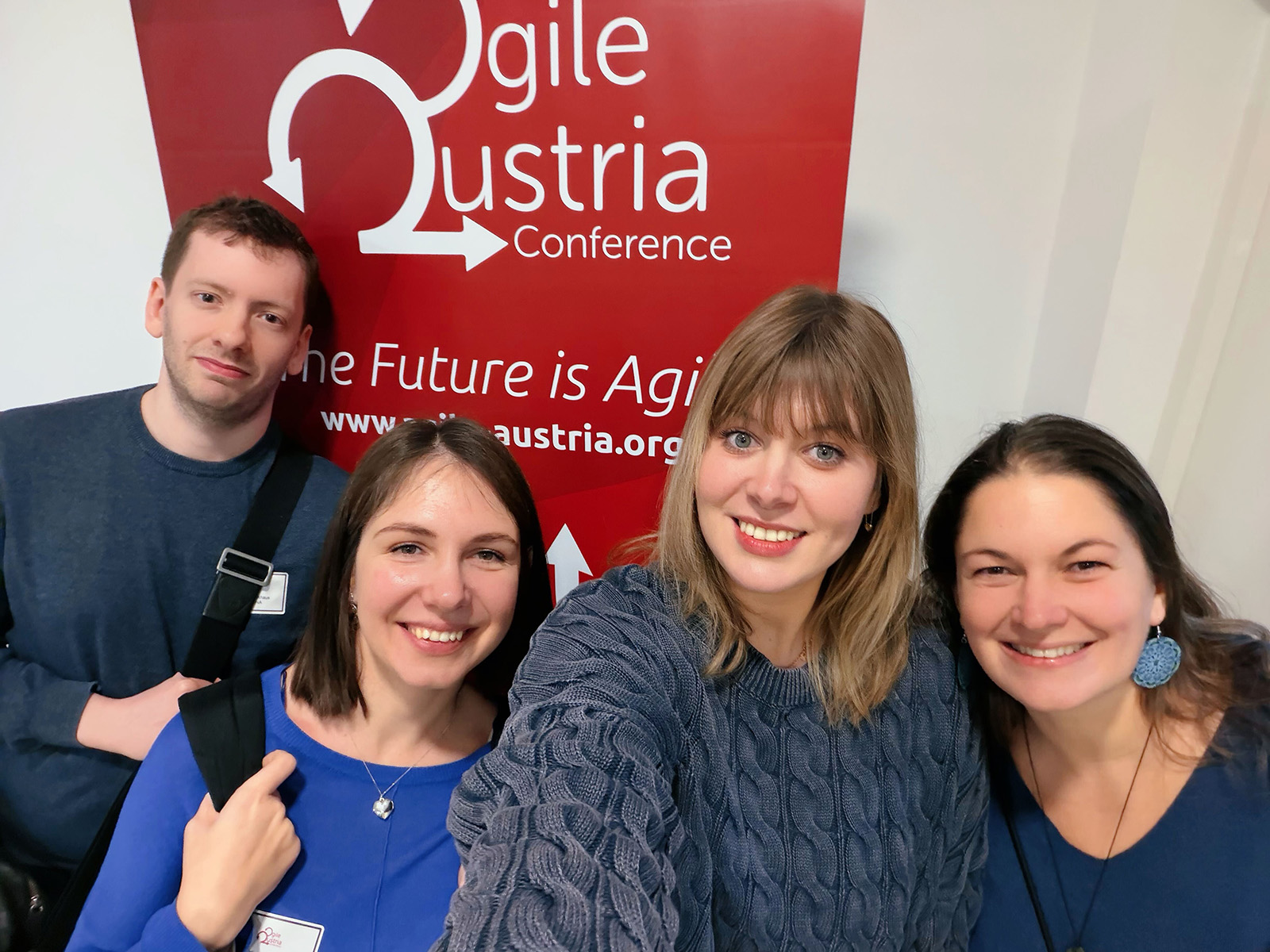
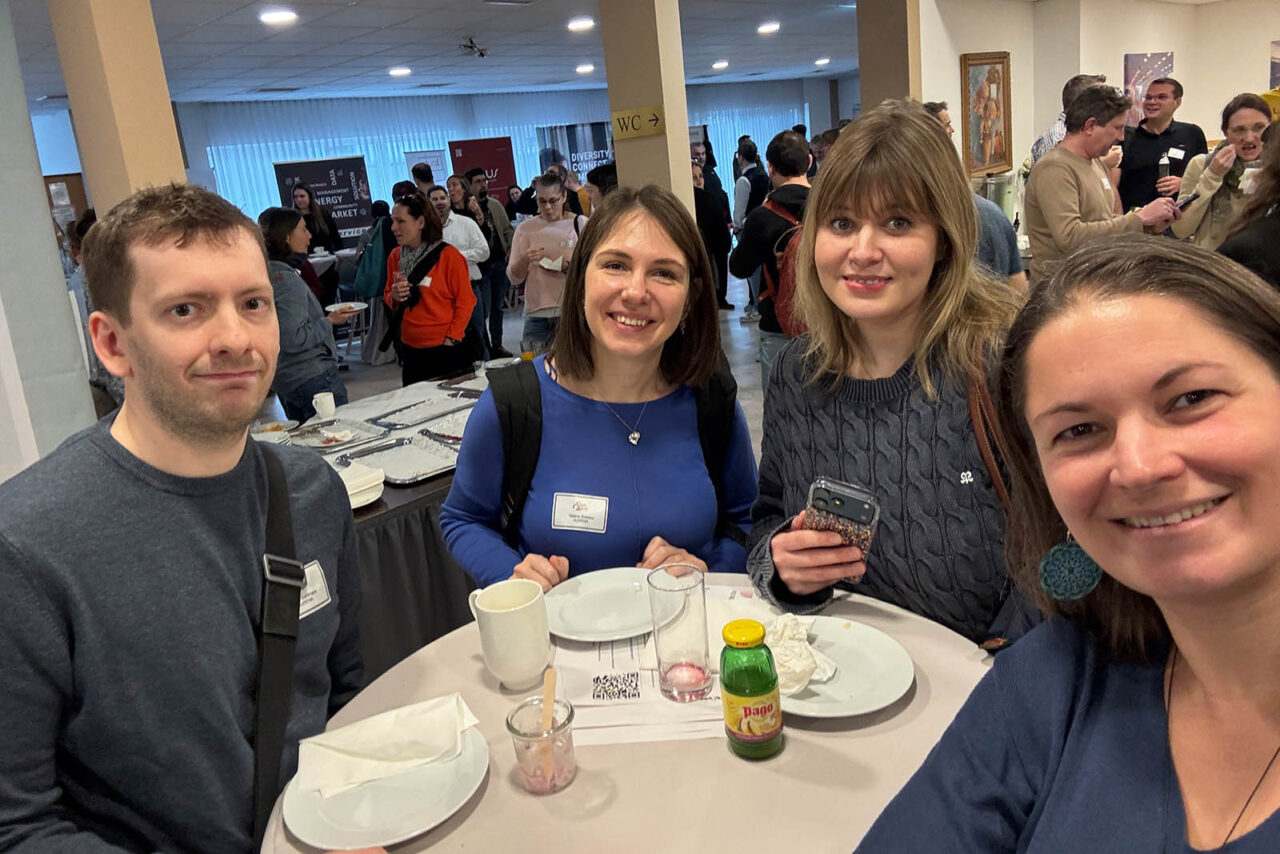
Members of the AURENA Tech Team attending the Agile Austria Conference 2026
”The conference touched exactly the topics that are keeping us busy these days: reinforcing the purpose and value of estimation exercises, reshaping teams while still staying productive, and figuring out where the line between AI and human agents should really be drawn. System-thinking reminded us that optimising one team rarely fixes the whole system (but might have great impact), while one conclusion stood out clearly: learning works best when it is voluntary and happens not only in self-organised teams, but also across teams – and preferably not just on slides or remotely, but in face-to-face interactions.
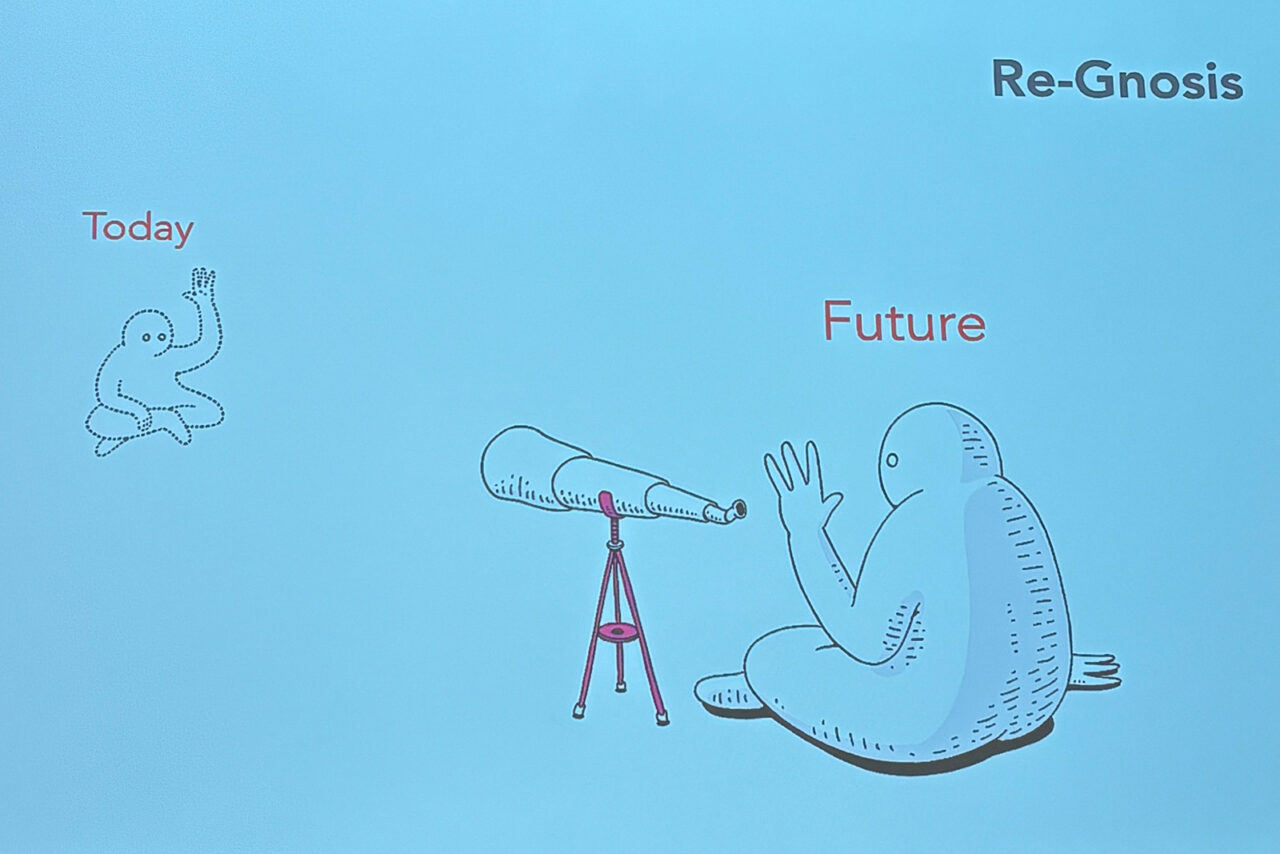
In the keynote from Oona Horx Strathern, we learned how megatrends are shaping our future. One interesting idea was that instead of creating a prognosis — a forecast of the likely outcome of a situation — we should focus on re-gnosis, the opposite approach. With re-gnosis, we start by seeing the future clearly and then work backwards, breaking down the steps and tasks needed to get there. The speaker also introduced the concept of the kindness economy — a trend in which companies focus less on pure profit creation and more on people and the planet, measured through sustainability and long-term impact.
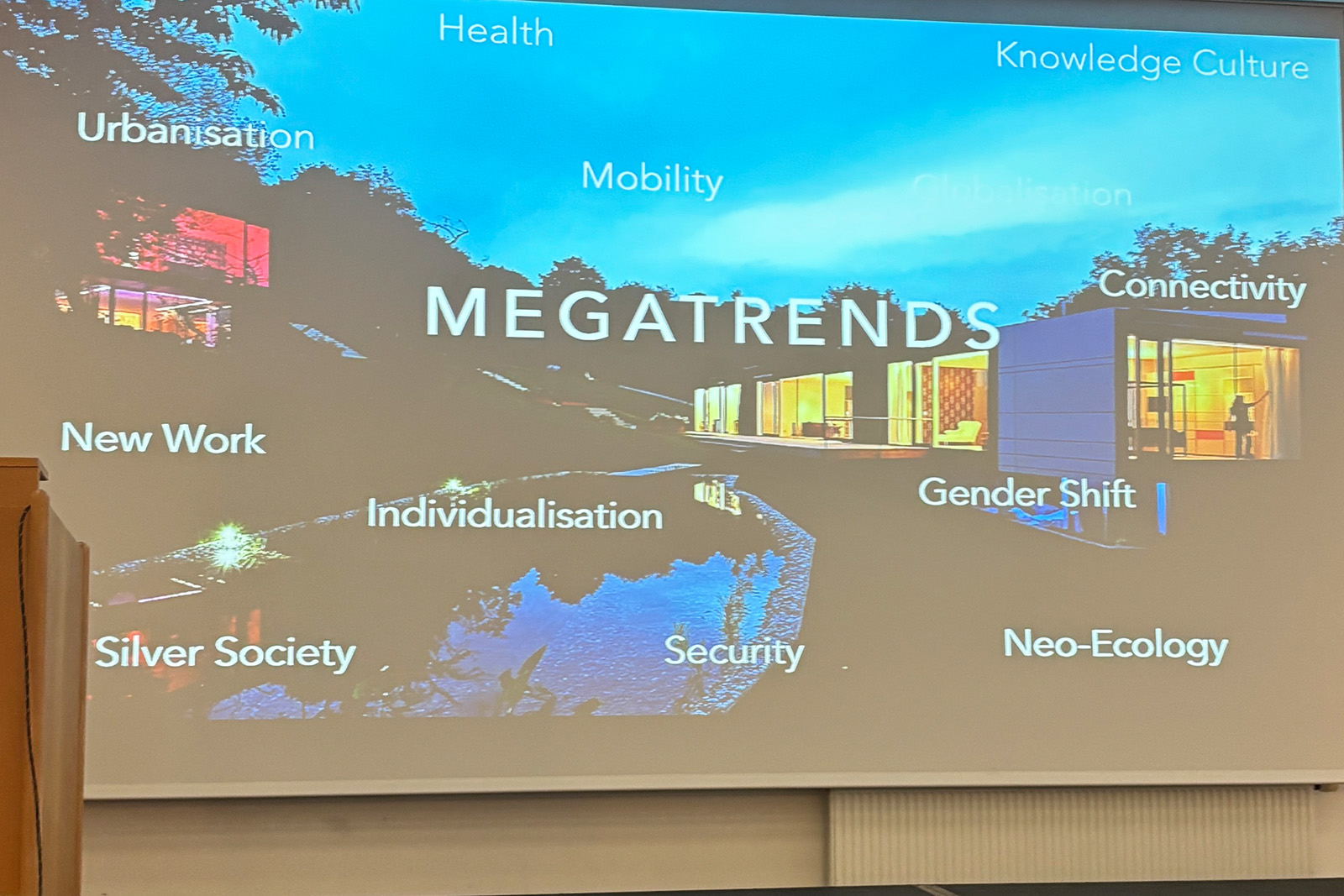
Overview on Megatrends; Keynote by Oona Horx Strathern
So what does the kindness economy have to do with agility? Agile ways of working are often seen as just another trend, helping organisations continuously adapt to a volatile, uncertain, complex, and ambiguous world. But being agile is much more than using an agile framework like Scrum or Kanban.
At its core, agility is about mindset and culture. It’s about open-minded, focused, and self-organised people working together toward a shared goal and vision. An agile mindset enables teams to create dynamic structures, collaborate effectively, and adapt quickly to change — all of which are essential in a world shaped by constant transformation.”
Iana: “The Agile Austria Graz conference felt very grounded in real-life practice rather than some abstract agile theories. The AI buzz could be heard from each and every corner, but a lot of the talks circled around human factors — psychological safety, communication, leadership maturity — and how they quietly make or break agile setups. And that’s exactly what I would expect from it: a confirmation that agility today is less about frameworks and more about awareness, trust, and continuously questioning how we actually work together — or rather, how much inspiration, emotional energy, and conscious effort it really takes to work with people and have meaningful, sometimes difficult conversations, which is often much harder than dealing with software.”
Tatjana: “As a book lover, I noted down some interesting future reads:
After all the buzzwords from years before, like ‘Agile’, ‘DevOps’, today we have ‘AI’ on the table, and there are many ways in which it impacts and will impact our work life in the future. But stepping away from the desk and going out there is a good reminder that we are all in the same boat and can help each other figure this out.”
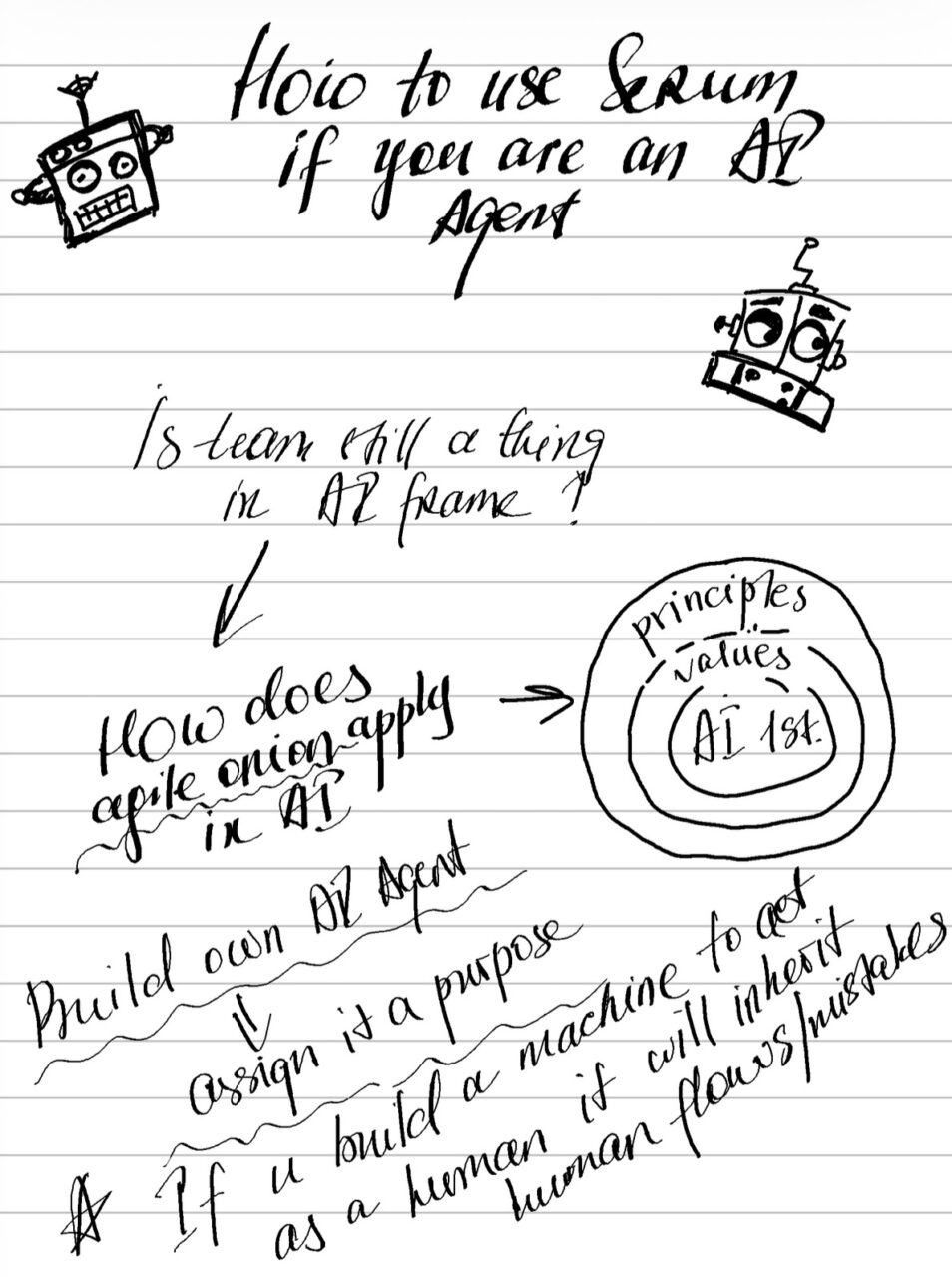
“AI, AI, AI. One thing to note about the Agile Austria Conference 2026 was, of course, the omnipresence of AI. For one, in the talks themselves, in the form of prompt-generated images on almost every slide of almost every presenter, but also in the discussions after and between talks. The Agile community seems split on the question of whether Claude and friends are tools that support development teams, or whether they are a universal termination notice waiting to be served to anybody involved in the software development lifecycle.
Speaking of termination notices, this instance of the Agile Austria Conference was surprisingly self-critical. Maybe the army of coaches and masters is realizing the irony of being part of a movement that originally valued people over processes, but in the eyes of many became the bringer of ‘death-by-meeting’. Or maybe this year’s conference theme hits the nail on the head: ‘Agility Beyond the Buzz – What Happens When the Hype Fades.’ Yes, the hype around Agile is over.
You could easily make the same statement about DevOps – its hype certainly subsided, and what was left of it evolved into the platform engineering movement. But one thing holds true for both Agile and DevOps: they were hyped, but they were not a hype. Both face valid criticism in the way they are sometimes practiced, but it is up to each organisation to decide how to live them in a way that benefits its members. Both are still around specifically because they offer an improvement over how things were done before: big upfront planning that tried to predict the whole course of a project, and hermetically sealed development and operations departments. If you are unhappy with how Agile is done in your company, first look critically at your organisation – and only then at the Agile methodology itself.
To close: Agile and the Agilists have turned 25 years old, and it might be time to perform a thorough retrospective on how idea and practice have developed and diverged; maybe even dare to update the Agile Manifesto, as one conference talk suggested. But there is no need to dig a grave just yet, or prepare a funeral speech. The Agile community is open enough to evolve and improve, and it has an innate motivation to do so – in contrast to AI.”
“Visiting the conference together reminded us that strong team connections go far beyond Jira tickets. Learning side by side, sharing laughs, and reflecting together are how we grow — because for us, conferences aren’t rewards, but part of continuous development, and working together is something we genuinely enjoy.”
Let’s build to thrill together!